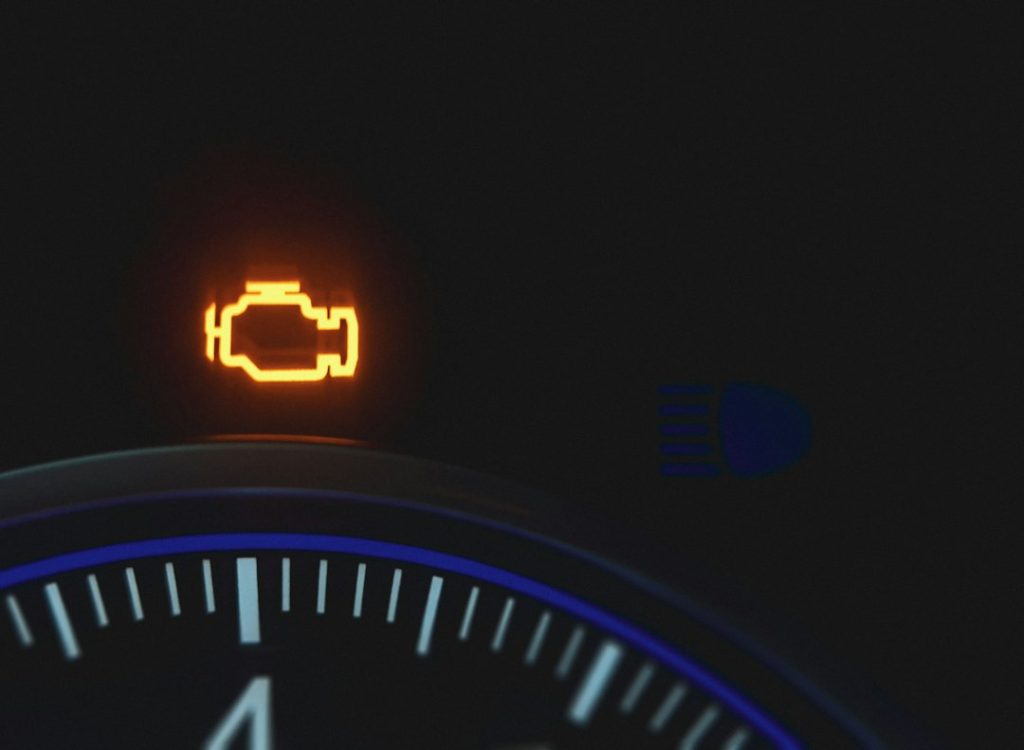
A check engine light means the vehicle’s onboard monitoring system has detected a condition that needs attention. The light does not tell you, by itself, which part to replace or whether the vehicle is safe to keep driving.
Steady and flashing lights need different attention
Consult your vehicle’s owner’s manual for instructions. A flashing check engine light can indicate a serious running problem and needs prompt attention. If the vehicle is shaking, losing power, overheating, or behaving unsafely, stop safely and obtain appropriate assistance. A steady light also deserves evaluation; it is not permission to ignore a change in the vehicle.
Why a code scan is only the starting point
A diagnostic trouble code points to a condition or system the vehicle detected. It does not always establish the root cause. Testing, inspection, and the symptoms you report help determine whether the issue involves a component, wiring, a leak, or another cause.
What to do before your diagnostic visit
- Record when the light appeared and whether it is steady or flashing.
- Note any rough running, stalling, unusual sounds, or recent changes.
- Follow the manual’s guidance for the warning.
- If your vehicle has a fuel cap, check it only as instructed in the manual; do not assume it explains the warning.
- Avoid clearing codes before the shop has evaluated the concern.
Common questions
Can a vehicle run normally with the light on?
Sometimes there is no obvious change in how it drives. That does not identify the issue or rule out a problem. Arrange an evaluation and follow the manufacturer’s instructions.
Will replacing a sensor turn the light off?
Only if that repair addresses the actual cause. Replacing a part suggested by a code description without diagnosis can leave the original problem unresolved.
Start with diagnosis
Tell Arboretum Auto Service what the light is doing and how the vehicle behaves. The team can discuss the next step for evaluating it. Explore the related service or contact our team. You can also call 512-343-8393.
Further reading: EPA: what to do with the check engine light. For instructions specific to your vehicle, consult its owner’s manual.
Featured photo: Compagnons via Unsplash. Illustrative stock photo.